
reading time ~6 mins
History & What it Represents
- Introduction
- Halloween Roots
- Secularisation of Halloween
- Commercial nature of Halloween today
- Summary
- Additional Reading
Introduction
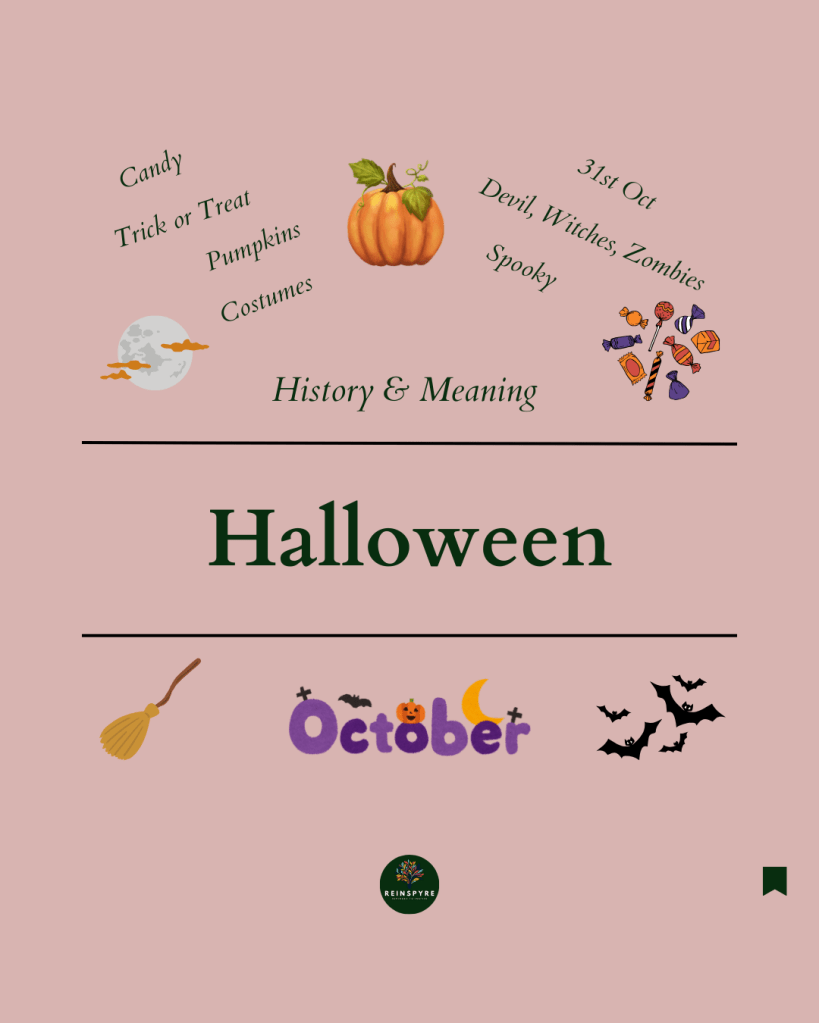
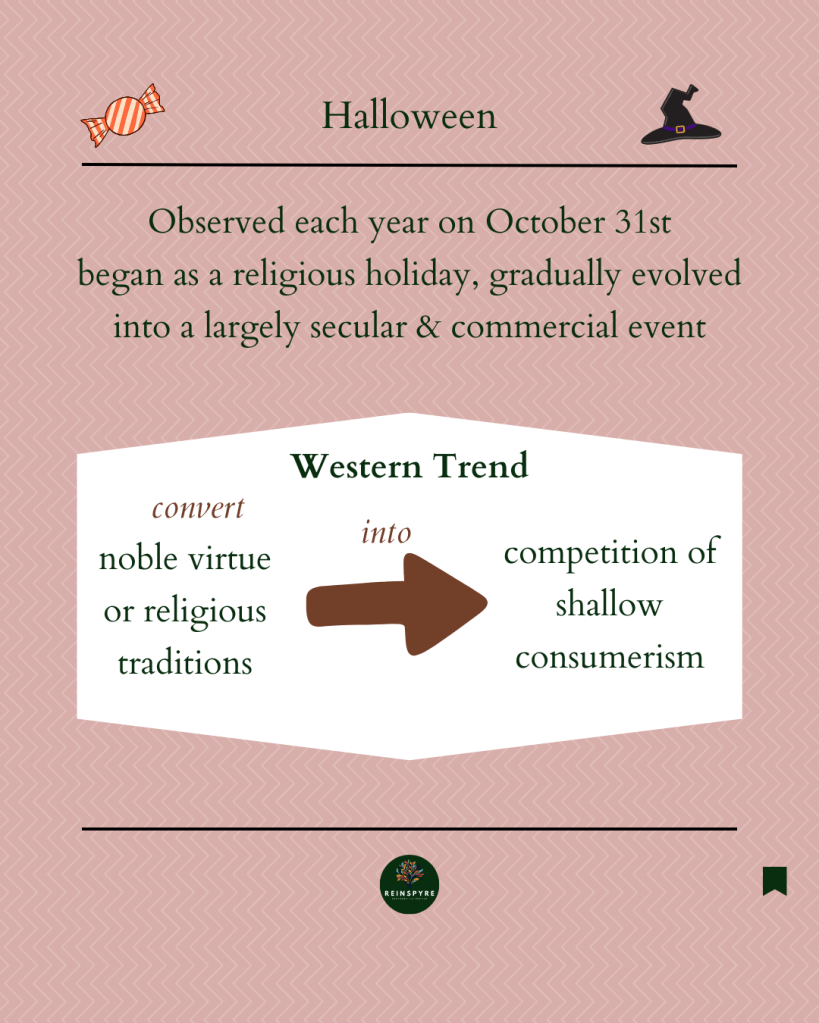
Halloween, observed each year on October 31st, began as a religious holiday but gradually evolved into a largely secular and commercial event
There appears to be a broad trend, particularly in the Western world, where once-religious rituals and meaningful celebrations have gradually transformed into secular, commercial activities driven by consumerism, materialism, and superficial gestures
Halloween Roots
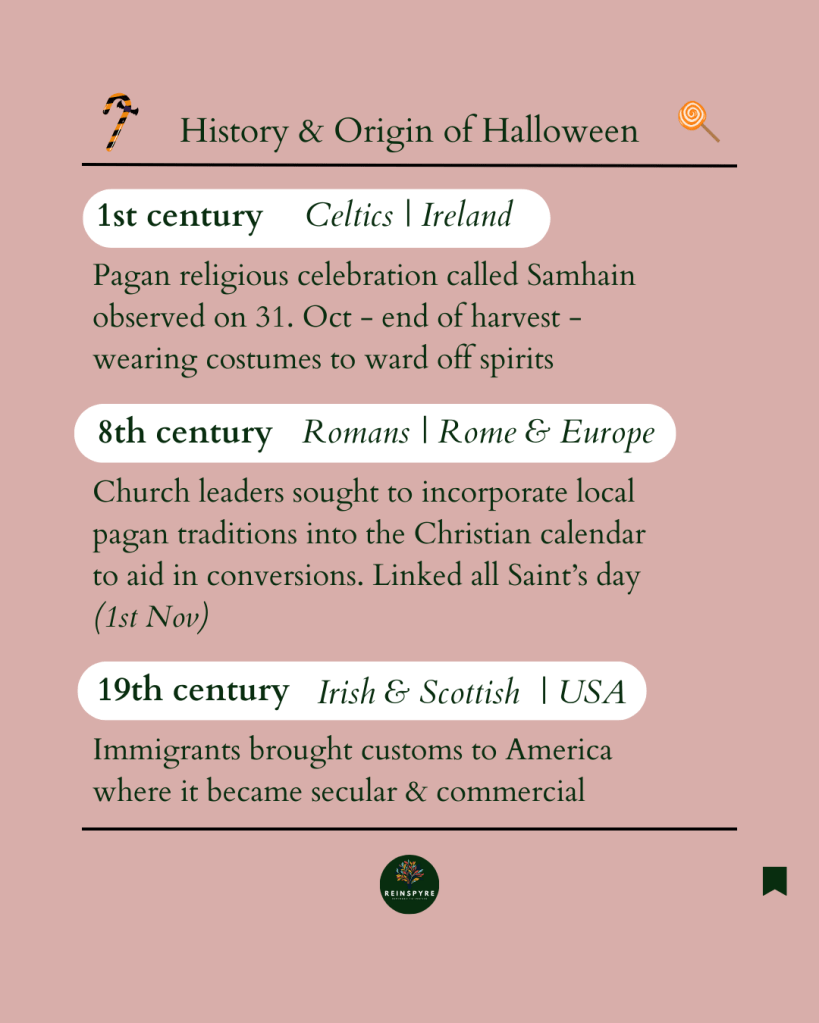
Halloween originated from the ancient Celtic festival of Samhain, which was celebrated on October 31st. This festival marked the end of the harvest season and the beginning of winter, a time when Celts believed the boundary between the living and the dead was blurred. They lit bonfires and wore costumes to ward off spirits. Samhain is name for the month of November in gaelic
When Christianity spread through the Roman Empire and beyond, church leaders sought to incorporate local pagan traditions into the Christian calendar to aid in conversion efforts.This is pretty common in Christianity to give up their teachings & principles to local customs and please the masses
Pope Gregory III designated November 1st as All Saints’ Day (or All Hallows’ Day) in the 8th century to honour saints. The evening before, October 31st, became known as All Hallows’ Eve, later shortened to Halloween
Over time, Halloween evolved with various traditions from different cultures, including trick-or-treating and jack-o’-lanterns, which emerged in 19th-century America as Irish and Scottish immigrants brought their customs to the United States
Other names associated are All Hallows Eve, All Saints Day
Secularisation of Halloween
Halloween began to secularise primarily in the late 19th to early 20th century in the United States. As Irish and Scottish immigrants brought their traditions, the holiday started shifting from a religious and superstitious observance to a community-centered, family-friendly event. Key factors in its secularisation include
- Community Celebrations: By the 1920s and 1930s, Halloween parties, parades, and community events became popular. These focused more on games, costumes, and socialising, reducing the emphasis on spiritual or superstitious elements
- Commercialization: The mid-20th century saw a boom in the commercialization of Halloween, with businesses producing costumes, decorations, and candy. The focus on costumes and trick-or-treating helped make it a fun, secular celebration for children and families
- Trick-or-Treating: This tradition, which gained popularity in the 1930s and 1950s, further secularised Halloween by emphasising the social and playful aspects of the holiday. It moved away from earlier customs like playing pranks, divination, or warding off spirits
By the mid-20th century, Halloween had largely become a secular, community-focused holiday characterised by costumes, candy, and festivities rather than religious or spiritual practices
Commercial nature of Halloween today
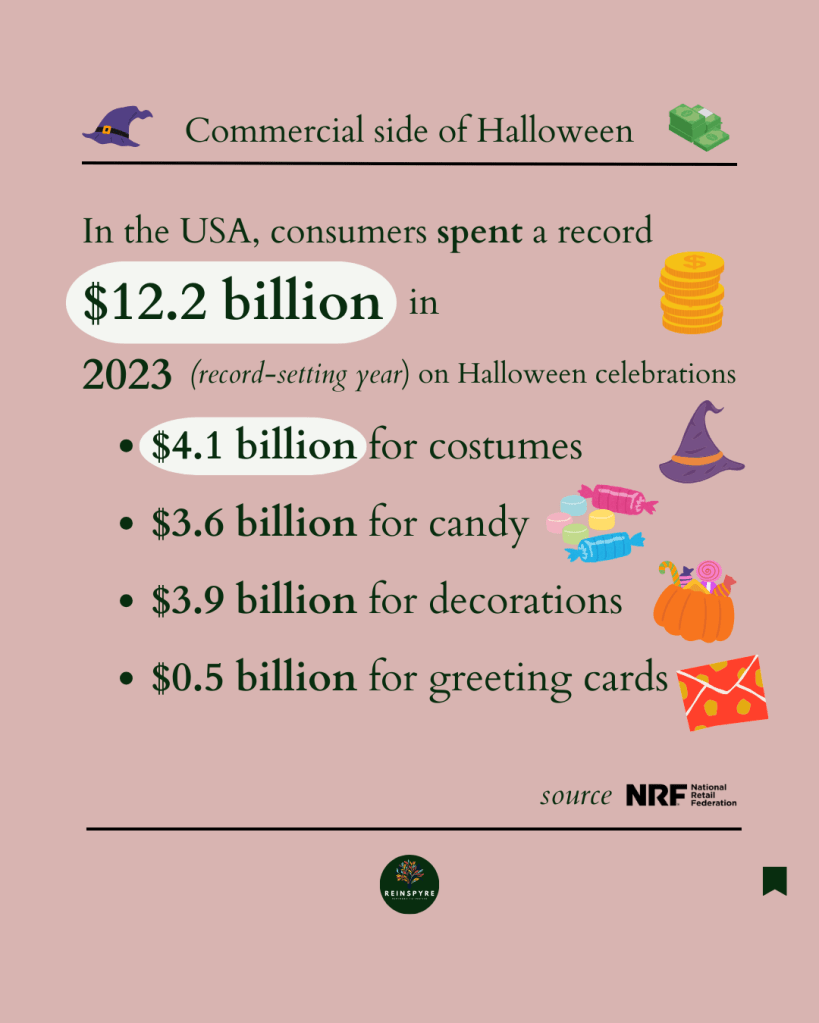
In the United States of America, consumers spent a record $12.2 billion in 2023 (record-setting year) on Halloween celebrations
- $4.1 billion for costumes
- $3.6 billion for candy
- $3.9 billion for decorations
- $0.5 billion for greeting cards
Source: National Retail Federation. “2023 Halloween Trends
Did you know? One quarter of all the candy sold annually in the U.S. is purchased for Halloween (History)
Summary
History
- Halloween is observed on 31st of October each year
- Originally it was a pagan religious holiday | ~2,000 years ago
- It was later brought into Christianity | ~8th-11th century
- It became a secular holiday | 19th century
- It became highly commercialised | 20th century
Purpose & Meaning Today
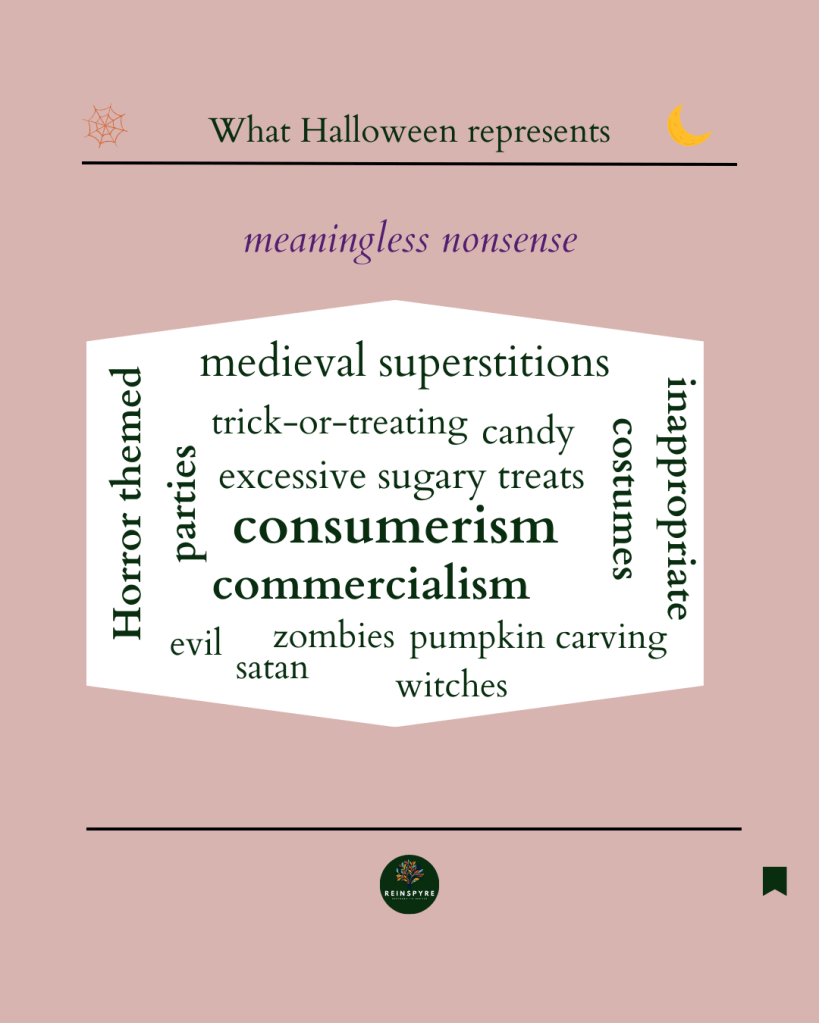
- Today, Halloween is primarily driven by
- consumerism
- excessive sugary treats
- costumes, many of which often push the boundaries of appropriateness
- with a strong focus on themed parties and commercialised festivities
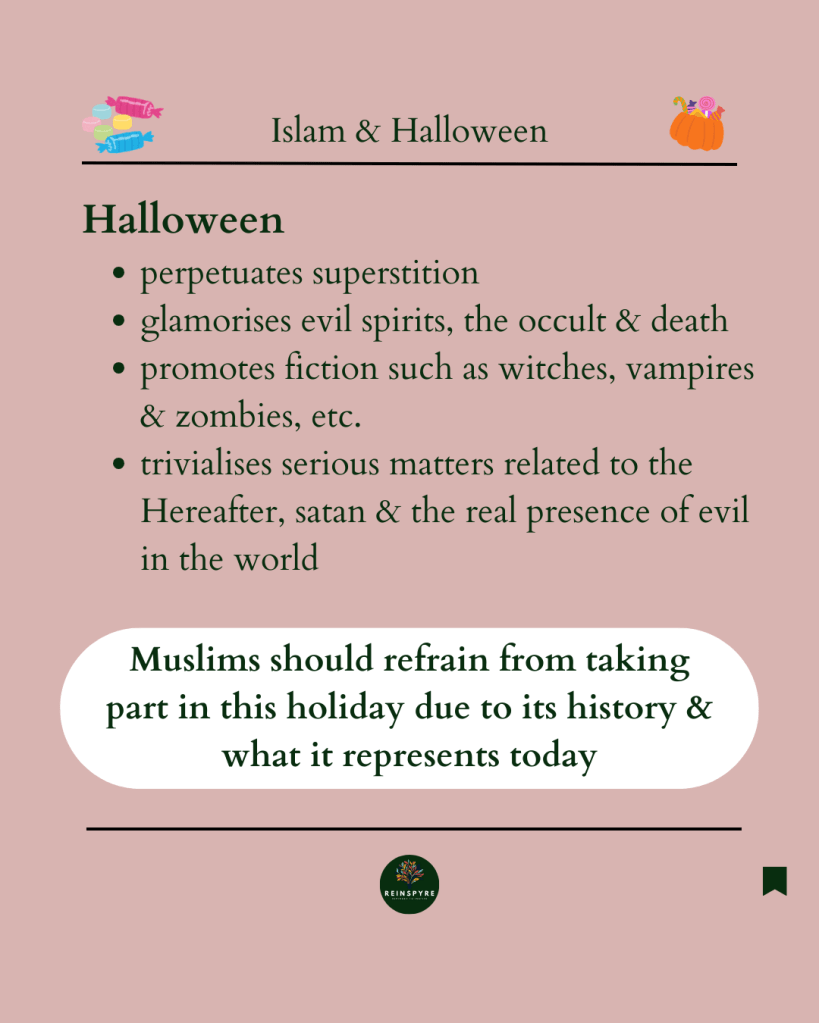
- It perpetuates
- superstition
- glamorises themes of evil spirits, the occult and death.
- promotes fictional entities such as witches, vampires & zombies, etc.
- It trivialises, underplays and jokes about serious matters related to the hereafter and the dark figure of satan and real presence of evil in the world
- Muslims should refrain from taking part in this holiday due to its history and what it represents today
Additional Reading
- Why do we Celebrate Halloween (Britannica)
- History of Halloween (History)
- Halloween: costumes, history, myths, and more (National Geographic)
- How Much Americans Spend on Halloween (Investopedia)
- Consumer spending on Halloween candy in the United States from 2017 to 2024 (Statista)
- Halloween Trends (National Retail Federation)
- How to Talk to Kids About Halloween and Islam (Article Yaqeen Institute)
 Reinspyre